
Why We Almost Always Recommend a Floating Vanity (And What They Actually Cost)
A straightforward guide for Seattle homeowners who want to know if the modern look is worth it.

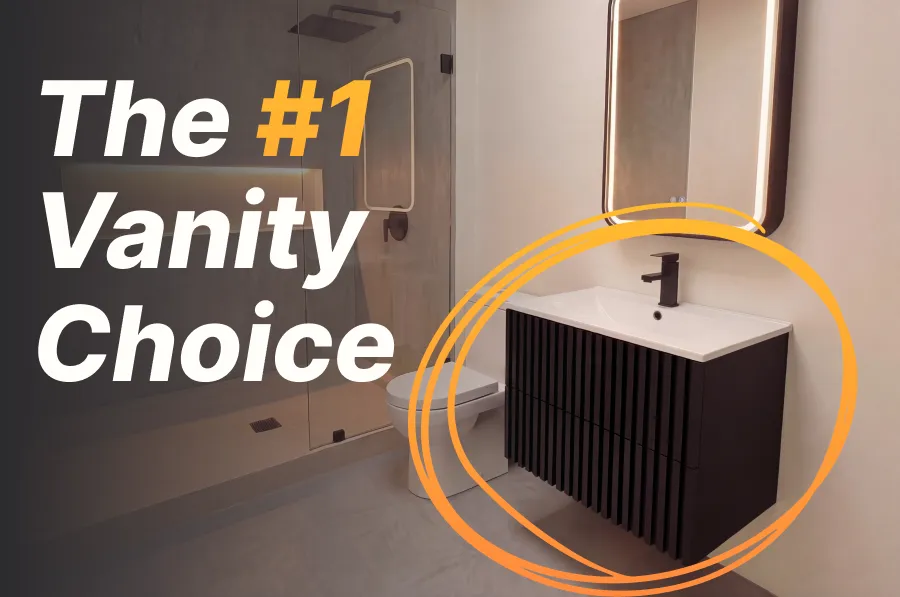
A client said something to us recently that stuck with me.
We were in the planning phase of their bathroom renovation and when floating vanities came up, they paused. "Isn't a floating vanity harder to install? I figured a regular one with legs would just be less hassle."
To be fair, it's a reasonable assumption. And it's just one of the common questions we've been getting lately when recommending this option to our clients.
So I wanted to put something together that gives you real answers. Think of this post as the honest breakdown we'd give a neighbor over coffee.
I'll cover what floating vanities actually are, what they really cost, why we reach for them in most of our bathroom renovations here in Seattle, and when they might not be the right call for your space.
Let's get into it.
What Is a Floating Vanity?
A floating vanity is a wall-mounted bathroom cabinet and sink that doesn't touch the floor. There's no legs, and no base. The whole thing is secured directly to the wall, which creates open space underneath and that clean, floating look that's become a staple of modern bathroom design.
If you've walked into a nicely renovated Seattle condo or a boutique hotel bathroom and thought "why does this feel so much bigger in here?" there's a good chance a floating vanity was doing some of that work.
They've been around for a while, but they've gotten a lot more accessible over the last decade. More styles, more price points, and more contractors who know how to install them right.
Let's Talk About What They Actually Cost
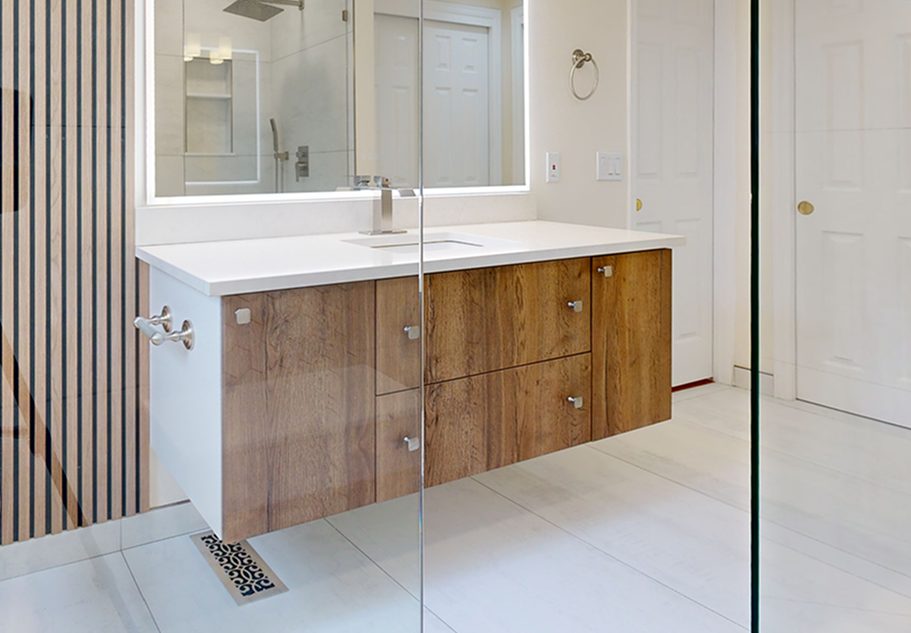
Here's the thing that surprises most people: floating vanities don't cost more to install than a traditional one. The installation fee is typically the same either way. The vanity unit itself is often cheaper than more traditional styles.
We had a client recently who needed a vanity replacement. The traditional option they were looking at came in around $1,400. The floating option we found for them? That was only about $800 – and it looked way better.
For units alone, you can find floating vanities starting as low as $200–$300 for smaller sizes, though the vanities we typically spec for clients run between $500 and $1,400 depending on size and finish.
So where does the "floating vanities are more expensive" idea come from? Probably from generic pricing guides online that aren't based on real project experience. Or from assuming that because something looks more modern, it must cost more money to install.
Well I'm here to tell you that neither is true, at least not in our experience doing this work across Seattle, West Seattle, Bellevue, and Kirkland.
But why do we prefer this look over other styles?
Why We Recommend Floating Vanities in Most Bathrooms
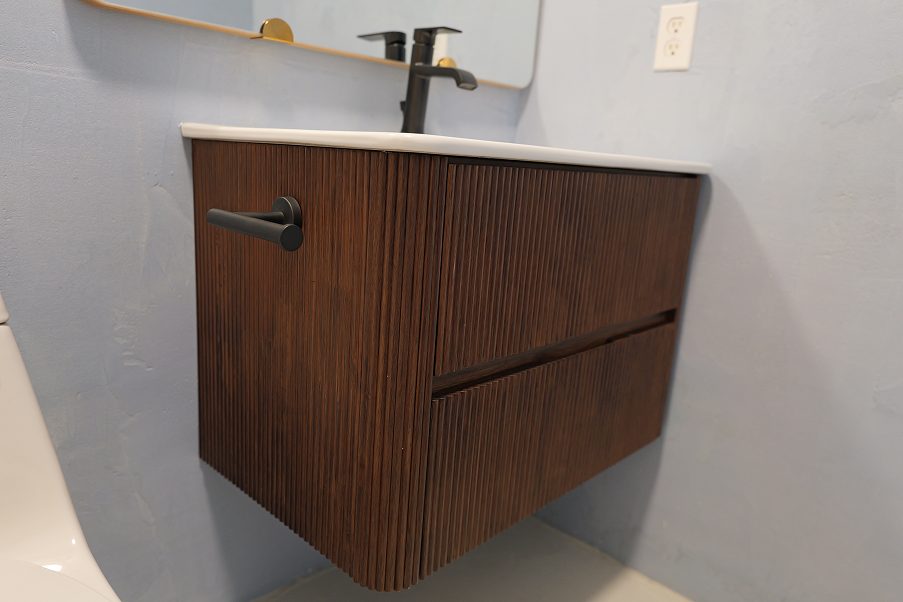
We don't push floating vanities because they're trendy. We recommend them because they consistently make bathrooms feel and function better. Here's what we tell clients.
#1: The Bathroom Appears Larger
First and foremost, they make the room feel bigger. Because the floor is visible underneath, there's an uninterrupted sightline across the whole bathroom. Now it sounds subtle, but it changes the vibe of the room, especially in the smaller bathrooms you find in a lot of Seattle homes and condos.
#2 You Get Storage Space Underneath
This one surprises people, but when the vanity is mounted to the wall and doesn't require legs, the space underneath becomes the perfect spot for things like your slippers, or a small basket for extra towels. Anything low-profile slides right under there.
You're not losing that floor space or sacrificing storage space here.
#3 You Can Clean the Floor
Ah, yes. When the floor is open, you can now actually clean your entire bathroom floor. There's no more cabinet base to mop around, just collecting grime. You can now sweep or mop straight underneath without moving anything.
#4 It's a More Stylish Look
Look, we install a ton of vanities. Floating ones just tend to look better. Now obviously this is subjective, but it's how we feel. The cleaner lines and minimal footprint just age well. There's nothing fussy about them.
Quick Note: Storage depends on the design, not the style. We've had clients turn down floating vanities specifically because they wanted more cabinet space, only to find out a larger floating vanity can offer nearly the same storage. Some sit just a couple inches off the ground. You'd barely notice the difference.
When a Traditional Vanity Might Make More Sense
At this point, it's clear that we think floating vanities are the better choice in most cases, but there are situations where we'd tell you to think twice.
If you have a large household with genuinely packed bathroom storage needs and no linen closet or nearby cabinet to overflow into, a traditional vanity with tons of cabinet space might just be more practical.
Same goes if you're on a tight budget and want to keep the project as simple as possible. A basic traditional vanity swap is about as straightforward as it gets.
And if your bathroom has a wall with real structural issues, significant water damage or deteriorating older plaster, we'd want to assess that before mounting anything to it.
Those situations aside? We almost always land on floating.
What the Installation Actually Looks Like
A lot of the "floating vanities are complicated" concern comes from imagining the install is some kind of custom construction job.
It's not.
Here's what actually happens.
The trickiest part is usually removing the old vanity without damaging the wall or the surrounding area. If there's a backsplash that doesn't match the new setup, or drywall gets nicked during removal, that creates extra work like patching, texturing, and painting. That's where things can get tedious if you're not prepared for it.
Once the old vanity is out and the wall is clean, we check the fit of the new one. If modifications are needed (not common), trimming the countertop or adjusting for an irregular wall, that's where having the right tools and knowing how to work with different materials matters.
For mounting, we use a stud finder, locate the studs, and attach the vanity directly to them. A lot of floating vanities have a backer board built in, so it's often wood-to-wood, no bracket required.
From there we connect the plumbing, get the drain and faucet set, and swap out the water valves if they need it.
Next, Doors and handles go on if they're not already attached, and we add the backsplash if it's part of the job. The mirror is always last.
A straightforward vanity swap can be done in less than a day. If modifications are needed, figure on a full day.
When it comes to doing it yourself, it's not always a great idea.. Not because it's mysterious, but because it requires specific tools and enough experience to handle the variables without creating new problems.
With the right setup, it goes smoothly. Without it, it's a struggle.
Thinking About a Floating Vanity for Your Bathroom?
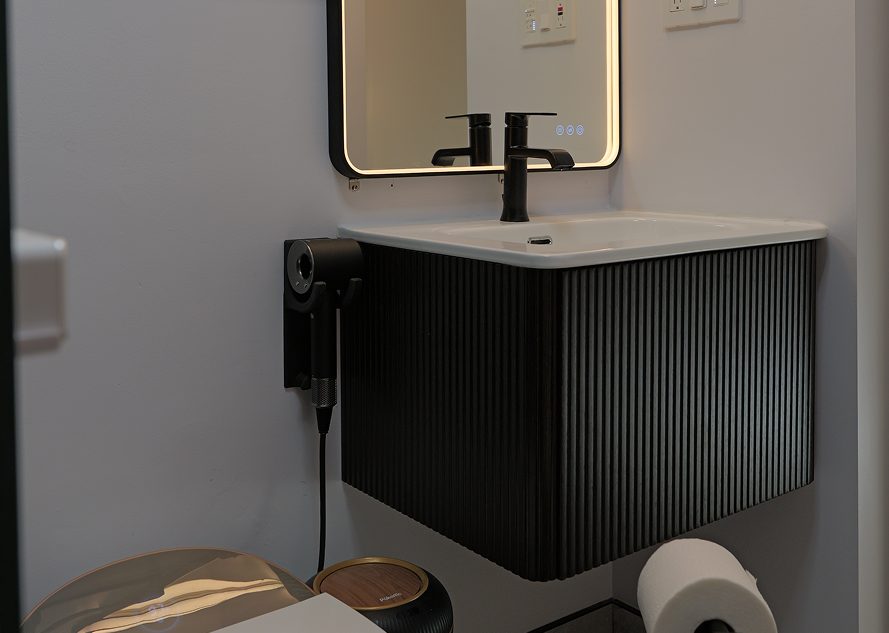
If you've been weighing your options on a bathroom renovation and weren't sure whether a floating vanity made sense for your space, I hope this helps.
They're not a premium upsell.
They're just a better fit for most bathrooms we work in.
If you want to talk through your specific layout, what it would cost, or whether your wall is set up for it, send us a photo with your budget, and we'll tell you in 24 hours if a floating vanity works for your bathroom.
Explore Recent Posts
Do you need an outlet for a bidet?

How to Choose the Right Contractor in Seattle: It Goes Both Ways