How Much Does a Bathroom Remodel Cost in Seattle? (2026 Guide)
Real 2026 Seattle numbers from a local design-build team: midrange ≈ $26K, what moves the price from $12K to $90K+, permit fees, and 8 ways to save.

Have you been wondering what it really costs to renovate a bathroom in Seattle?
With so many estimates online, it’s easy to feel overwhelmed, especially when most focus on outdated national averages that don’t reflect Seattle’s unique market.
The good news is you don’t have to guess. This guide is here to help you navigate the specifics of Seattle’s renovation costs, so you can not only plan your project with confidence, but save money and maximize your ROI.
DuetRight has completed 900+ jobs across 84 greater Seattle neighborhoods — you can see exactly where we work on our live coverage map.
Prefer the short version? Our renovation cost explorer puts every tier below side by side — same numbers, two minutes.
Here’s what you’ll get from this article:
- Real cost estimates tailored to Seattle’s market in 2026.
- How to boost your property’s appeal and resale value.
- Smart strategies to save money without sacrificing quality.
And by the end, you’ll understand how to set a realistic budget and make informed decisions for your renovation. Ready? Let's go!
What Will Your Seattle Bathroom Renovation Cost?
This is why you're here, so let's get right to the point.
While every bathroom renovation in Seattle is different, depending on size, layout changes, materials, and labor, the Journal of Light Construction (JLC) 2025 Cost vs. Value Report gives us a reliable, apples-to-apples benchmark for what homeowners are actually spending and getting back in value:
- Midrange Bathroom Remodel: $26,138 (2025 Cost vs. Value Report)
- Universal Design Bathroom Remodel: $42,183 (2025 Cost vs. Value Report)
- Upscale Bathroom Remodel: $81,612 (2025 Cost vs. Value Report)
Each category has distinct features that contribute to the final renovation prices.

With average total cost out of the way, let’s break down what sets each tier apart to better understand the scope of these renovations.
Midrange Bathroom Remodel
Average Cost: $26,138
Resale Value Added: $20,915
Cost vs. Value (ROI): 80%

A midrange bathroom remodel, which averages $26,138 according to the Journal of Light Construction’s 2025 Cost vs. Value Report, focuses on updating a full bathroom without expanding the footprint or dramatically altering the layout.
In most Seattle homes, this type of bathroom is approximately 5 by 7 feet and includes all four essential fixtures: a toilet, sink, bathtub, and shower. Because these bathrooms are used daily, the emphasis is on durability, functionality, and clean, timeless design rather than high-end customization.
Based on the JLC scope, a midrange remodel typically involves replacing the existing bathtub with a 30 by 60 inch porcelain-on-steel tub, paired with a ceramic tile tub surround. Fixtures are updated to include a standard white toilet and modern, pressure-balanced shower controls.
The vanity is refreshed with a solid-surface countertop and integrated sink, and storage and visibility are improved with the addition of a recessed medicine cabinet that includes built-in lighting.
Flooring is replaced with ceramic tile, and wall finishes are updated with durable vinyl wallpaper designed for bathroom environments.
This level of renovation performs exceptionally well in Seattle because it modernizes older bathrooms without over-customizing the space.
By keeping the existing layout intact, homeowners avoid the added cost of relocating plumbing and electrical, while still achieving a meaningful visual and functional upgrade.
As a result, midrange bathroom renovations consistently deliver the strongest return on investment, appealing to both current homeowners and future buyers who value practicality, reliability, and a move-in-ready feel.
Every price in this guide came from a real walkthrough, not a formula. If you want to know where your bathroom actually lands, we’ll come take a look. It takes about an hour, no pressure.
Start Your ProjectUniversal Design Bathroom Remodel (A Growing Seattle Trend)
Average Cost: $42,183
Resale Value Added: $25,812
Cost vs. Value (ROI): 61.2%
Universal design renovations are becoming increasingly popular in Seattle as homeowners plan for aging in place, multigenerational living, and long-term accessibility.
These projects focus on improving safety and usability while maintaining a clean, modern, residential look.
This type of renovation typically upgrades an existing 5 by 7 foot bathroom to be fully wheelchair-accessible without making the space feel clinical.
Entryways are widened to accommodate mobility needs, and thresholds are eliminated to create a smooth, barrier-free transition into the bathroom.
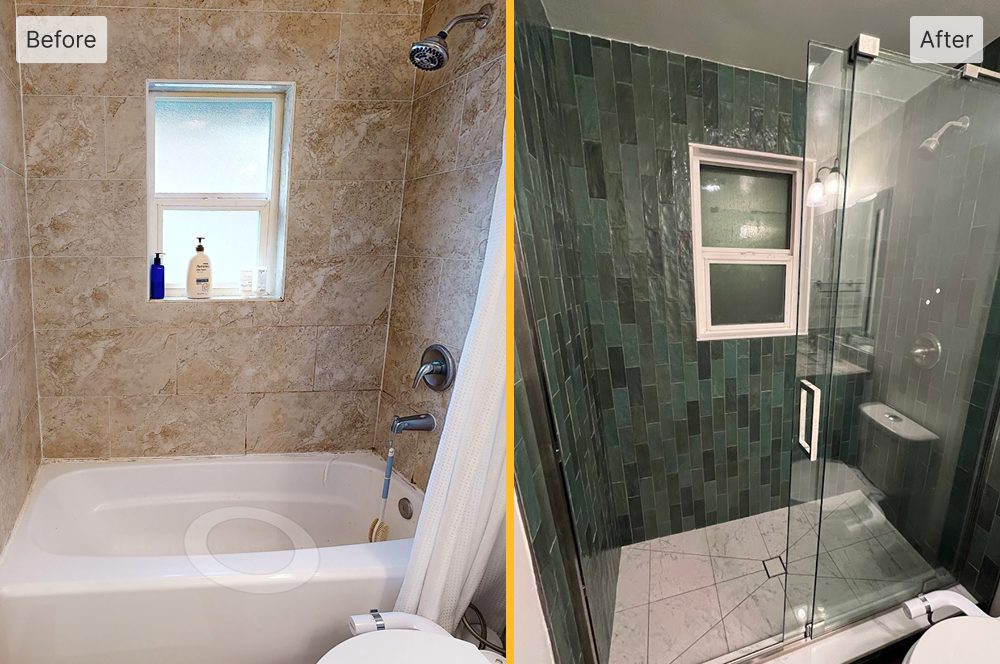
According to the Journal of Light Construction, the scope of a universal design remodel often includes replacing the existing tub with a curbless, tiled walk-in shower.
That specific change, pulling the tub and putting in a walk-in shower, has its own price bands separate from a full renovation. We broke them out by scope tier in our Seattle tub-to-shower conversion cost guide.
These showers are designed with adjustable showerheads, fold-out seating, thermostatic mixing valves, and bi-directional glass doors to improve comfort and ease of use.
Comfort-height toilets with elongated bowls and bidet-style seats are also commonly included.
Vanities are upgraded to adaptive designs with easy-grasp hardware and adjustable mirrors to support a wider range of users.
Additional upgrades typically include radiant floor heating beneath luxury vinyl tile, which improves comfort and safety underfoot.
Lighting is enhanced with a combination of LED fixtures, infrared ceiling lights, and night lighting to improve visibility throughout the space.
Ultra-quiet exhaust fans with humidity-sensing controls help manage moisture and improve air quality.
Reinforced towel bars rated to support up to 250 pounds are installed to function as discreet grab bars.
Storage is reconfigured so it can be accessed easily from a seated position.
While the return on investment percentage is lower than that of a midrange renovation, universal design offers value that extends beyond resale numbers.
In Seattle’s competitive housing market, accessible bathrooms appeal to a broader range of buyers, particularly downsizers and older homeowners.
More importantly, they provide long-term comfort, independence, and peace of mind for those who plan to stay in their homes for years to come.
Upscale Bathroom Remodel
Average Cost: $81,612
Resale Value Added: $34,000
Cost vs. Value (ROI): 41.7%

Upscale renovations are about experience, not resale efficiency.
An upscale bathroom remodel, which averages $81,612 according to the Journal of Light Construction’s 2025 Cost vs. Value Report, is less about updating what already exists and more about redefining how the space is used.
These projects typically involve expanding a smaller primary bathroom into a much larger footprint, often growing from roughly 35 square feet to around 100 square feet within the existing home. The goal is not efficiency, but comfort, openness, and a sense of retreat.
In an upscale renovation, the layout itself is usually rethought. Fixtures are relocated, walls may be moved, and the bathroom is rebuilt with a clear emphasis on space and flow.
The shower becomes a focal point, commonly upgraded to a 42 by 42 inch neo-angle design with fully tiled walls, accent details, body sprays, and a frameless glass enclosure. Freestanding soaking tubs are frequently added, along with stone countertops, dual sinks, custom cabinetry, and layered lighting that balances function with ambiance.
Features like radiant heated floors, upgraded ventilation, and extended HVAC systems are also common at this level.
Unlike midrange renovations, upscale bathroom projects are rarely driven by return on investment alone. While they do add value, their primary payoff is day-to-day enjoyment.
These bathrooms are designed to feel private, quiet, and spa-like, offering a level of comfort that standard layouts simply cannot. For homeowners who plan to stay in their home long-term and want a space that feels intentional and personalized, an upscale renovation is about quality of life first, with resale value as a secondary benefit.
Complete data from the 2025 Cost vs. Value Report can be downloaded free at www.costvsvalue.com. ©2025 Zonda Media, a Delaware corporation.
Averages only go so far
Want your number, not a range?
Every bathroom is different. Tell us about yours and we’ll give you a real price — scope first, then price.
How Can Costs Vary So Much?
Planning a bathroom renovation can be confusing when you see estimates that range anywhere from $10,000 to more than $90,000. Where do those numbers come from?
In Seattle, especially, costs reflect local labor rates, the availability of high-quality materials, and even the complexity of your renovation.
Consider two neighbors: Linda saved about $3,500 by keeping her toilet and shower in the same spots, while James spent an extra $5,000 rerouting plumbing for a brand-new layout. One small change such as moving a shower drain can lead to big differences in both labor and permit fees.
Below, you’ll learn more about each key factor so you can plan your budget with confidence.
Seattle’s Market: Skilled Labor and High Demand
Labor is a significant portion of any renovation budget, and in Seattle, skilled trades like plumbers, electricians, and tile installers command higher-than-average rates. Fortunately, hiring a trusted renovation company can streamline the process by managing multiple tradespeople for you, ensuring efficiency and accountability.
- Plumbing: Relocating fixtures can cost between $2,000 and $6,500.
- Electrical: Adding outlets or upgrading lighting may add $500 to $2,500.
- Tile Installation: Typically ranges from $7 to $40 per square foot.
- Demolition: Often included in your contractor’s estimate if it’s needed, but can run $500 to $2,000 if separate.
These local labor rates in Seattle generally reflect both the city’s cost of living and the high demand for skilled professionals. Plumbers often charge $45 to $200 per hour, electricians $50 to $130 per hour, and painters $1 to $6 per square foot or $20 to $50 per hour.
Material and Fixture Costs: Your Choices Matter
The materials and fixtures you select play a major role in determining your final bill. In Seattle, material costs for an average bathroom often range from $1,000 to $9,000, depending on quality and style.
- Countertops: Prefabricated laminate or quartz typically cost $200 to $1,000, while custom stone surfaces can run $500 to $4,000.
- Flooring: Vinyl can start at about $1 per square foot, whereas premium porcelain wood-look tile can reach $16 per square foot.
- Fixtures: A standard toilet might cost $125, while a high-tech smart toilet can exceed $2,000.
- Lighting and Ventilation: New light fixtures and exhaust fans can add $200 to $1,000.
Cost-effective materials—like ceramic tile or stock vanities—can keep the look fresh while still fitting your budget.
Bathroom Size and Layout: A Key Factor in Costs
Size naturally affects how much you’ll spend on materials and labor. A larger bathroom means more flooring, more tile, and potentially more fixtures. For example, renovating a 100-square-foot space will cost significantly more than updating a compact 5x7-foot bathroom.
Layout changes can really drive up the total, especially if you move plumbing-heavy fixtures like a toilet or shower. These alterations can cost $150 to $6,500.
By keeping your existing layout—like Linda did in our quick anecdote—you might avoid thousands of dollars in extra labor. James, on the other hand, loved his new configuration but found that a completely different shower placement bumped his overall budget by roughly $5,000.
It’s a prime example of how even a single design choice can affect your costs.
Permits and Compliance: Non-Negotiable Costs
In Seattle, most bathroom renovations require permits for structural, plumbing, or electrical work, typically ranging from $500 to $1,500. These fees ensure your project meets local building codes and safety standards.
If your home is older, your renovation may involve additional updates to comply with current codes, which can add unexpected expenses but also ensure a safer, more durable end result.
Features like grab bars or barrier-free showers may cost slightly more but will broaden your bathroom’s functionality and long-term value.
How a Detailed Estimate Helps You Plan
A transparent estimate from your contractor breaks down each of these cost factors so you can better manage your budget. For example, your estimate might look like this:
- Labor: $15,000 for plumbing, electrical, tile installation, and demolition
- Materials: $6,000 for fixtures, flooring, countertops, and finishes
- Permits: $800
- Design and Project Manager Services (if included): $200
With these numbers in front of you, it’s easier to decide where you might want to spend more for higher-end features—or where you can save by choosing simpler layouts and materials.
By understanding the reasons costs vary, you can ensure each dollar of your renovation is spent in the right place, whether that’s a new layout, upgraded fixtures, or luxury finishes.
Next, we’ll look at how your investment in a bathroom renovation can pay off through increased property value and return on investment (ROI).
Plan with real numbers
Get a detailed estimate for your bathroom.
Line by line, tied to the scope — so you know exactly what you’re paying for before anything starts.
Will a Bathroom Renovation Pay Off?
Renovating your bathroom isn’t just about upgrading your space—it’s also an investment in your home’s value. In Seattle’s competitive housing market, a well-executed renovation can significantly boost your property’s appeal and resale price.
Let’s explore what kind of return you can expect from your investment.
General ROI: A Snapshot of the Numbers
In Seattle, bathroom renovation ROI varies widely depending on scope, with midrange projects delivering the strongest returns.
While this percentage might be slightly lower than other projects like kitchen renovations, bathroom upgrades still represent a solid investment. Beyond the numbers, a renovated bathroom can also make your home more attractive to buyers and help it sell faster.
ROI by Renovation Type
The return on investment from a bathroom renovation often depends on the scale and intent of the project.
For a midrange bathroom remodel, which averages $26,138 in Seattle according to the Journal of Light Construction’s 2025 Cost vs. Value Report, homeowners can expect an ROI of approximately 80%. In practical terms, this translates to an estimated $20,915 increase in resale value after completing a standard renovation that focuses on durable materials, updated fixtures, and a functional layout. This strong performance is one of the reasons midrange bathroom renovations are consistently considered one of the best value-driven renovation projects in Seattle.
Upscale bathroom renovations, while more design-forward and customized, tend to deliver a lower percentage return. Based on the same 2025 Cost vs. Value Report, an upscale remodel averaging $81,612 typically recoups about 41.7% of its cost, adding roughly $34,000 to a home’s resale value. While the financial return is smaller relative to the investment, upscale renovations often prioritize long-term comfort, personalization, and daily enjoyment over resale efficiency.
How Bathroom Renovations Impact Property Value
While ROI percentages provide a useful benchmark, the real impact of a bathroom renovation often shows up in how a home performs on the market.
In Seattle, updated bathrooms consistently rank among the most important features for buyers evaluating a property, particularly when comparing homes in the same price range.
A well-executed midrange or upscale bathroom renovation signals that a home has been properly maintained and thoughtfully updated.
This often translates to stronger buyer interest, fewer objections during showings, and, in many cases, faster sales. In competitive neighborhoods, move-in-ready bathrooms can be the difference between a home that lingers on the market and one that receives multiple offers.
In other words, the value of a bathroom renovation is not just what it adds on paper, but how it improves marketability, buyer confidence, and overall appeal at the moment it matters most.
Design Choices That Maximize ROI
Certain design decisions can make your bathroom renovation even more valuable. Opting for neutral, timeless styles ensures your space appeals to a broader audience, which is especially important if you plan to sell your home soon.

Features that enhance accessibility, like walk-in showers or grab bars, also add long-term value and attract a wider range of potential buyers. According to industry data, incorporating these elements can increase ROI to nearly 68.6%.
Seattle’s Unique ROI Landscape
It’s worth noting that renovation costs in Seattle are higher than the national average, which can slightly affect ROI percentages. However, the city’s robust housing demand and higher property values often offset these costs, delivering significant dollar-value gains for well-planned projects.
Making Your Renovation Worthwhile
To maximize the value of your investment:
- Focus on high-quality, durable materials that stand the test of time.
- Incorporate energy-efficient fixtures to reduce long-term utility costs and appeal to eco-conscious buyers.
- Ensure your bathroom design complements the rest of your home for a cohesive and inviting look.
While ROI is a key consideration, remember that renovating your bathroom also enhances your daily living experience—a benefit that’s hard to quantify.
In the next section, we’ll share practical tips to help you save money on your renovation without compromising on quality.
How to Save Money on Your Bathroom Renovation
Seeing high price averages for a bathroom renovation in Seattle can feel intimidating, especially when costs in the region often exceed national averages.
However, knowledge is power.
Understanding what drives these numbers can help you make informed decisions, reduce expenses without sacrificing quality, and see your renovation as a worthwhile investment in your home’s value and your daily life.
A bathroom renovation in Seattle doesn’t have to break the bank. With thoughtful planning and smart decisions, you can create a stylish, functional bathroom that fits your budget.
Below are practical strategies, along with creative ideas, to help you achieve the results you want while keeping costs in check.
1. Set Priorities and Plan Ahead
Start by identifying what matters most in your renovation. Are you focused on upgrading aesthetics, improving functionality, or both?
Once you’ve set your goals, create a clear plan with a realistic budget.
For example, if upgrading your shower is a top priority, allocate more of your budget to durable fixtures or tile. If you’re looking for a general refresh, focus on lower-cost changes like repainting walls or updating hardware.
Defining your priorities helps you and your contractor decide where to spend and where to save.
2. Choose Materials Wisely
Your choice of materials can drastically affect your overall costs. Opt for affordable yet durable options, such as ceramic tile, which offers a polished, long-lasting look at a fraction of the cost of natural stone.
Similarly, prefabricated countertops, which start around $200, provide a cost-effective alternative to custom stone surfaces that can exceed $4,000.
For fixtures, standard models like drop-in sinks or low-flow toilets are practical choices that offer style and functionality without the hefty price tag of custom or smart designs.
Even smaller updates, such as choosing simple brushed nickel faucets, can modernize your space without breaking the bank.
3. Keep the Existing Layout
One of the easiest ways to save is by sticking with your bathroom’s current layout.
Moving plumbing fixtures like toilets or showers can add $2,000 to $6,500 to your budget due to the cost of rerouting pipes.
By maintaining the existing placement of these fixtures, you can focus on refreshing the space with updated materials, lighting, and finishes while keeping labor costs lower.
4. DIY Where It Makes Sense
While tasks like plumbing and electrical work are best left to professionals, there are areas where DIY can save you money.
For instance, you can handle demolition work, such as removing old tiles, cabinets, or flooring, which would otherwise cost $500 to $2,000.
Painting is another manageable DIY task, with supplies costing $30 to $100 compared to professional rates of $1 to $6 per square foot.
Even smaller projects, like installing towel bars or light fixtures, can make a noticeable difference while keeping labor costs down.
5. Shop Smart and Repurpose When Possible
Look for sales or clearances to save on materials like flooring, vanities, and lighting. For example, replacing your existing vanity with a stock model can cost $200 to $800, compared to $900 to $1,500 for custom options.
Repurposing items is another great way to cut costs. An old console or desk can be transformed into a unique vanity with a trough or vessel sink, offering a custom look at a fraction of the price.
Refinishing elements like bathtubs, cabinets, or hardware can also give your bathroom a fresh, updated appearance without the cost of full replacements.
6. Optimize Storage and Lighting
Maximizing storage and improving lighting are effective ways to enhance your bathroom without major renovations.
Consider replacing a traditional swinging door with a pocket door to free up valuable space for additional storage or shelving. Pocket doors typically cost $500 to $2,300 to install but save room in tight bathrooms.
When it comes to lighting, swapping outdated fixtures for modern options can brighten your space without the expense of enlarging windows or adding skylights.
New fixtures are often affordable and can be installed for around $50 to $100 per hour of labor.
7. Work with a Bathroom Renovation Company to Bundle Services
Hiring a professional bathroom renovation company can streamline your project and save you money.
Instead of managing separate plumbers, electricians, and tile installers yourself, these companies often bundle services into a single package. This not only simplifies coordination but can also reduce labor costs.
For example, a renovation company may offer discounted rates on materials or fixtures sourced directly through their network of suppliers.
Additionally, their expertise allows them to identify cost-effective solutions tailored to your specific needs—such as suggesting midrange materials that balance quality and affordability.
By working with a dedicated renovation company, you’ll benefit from their project management experience and access to bundled services, which often results in a faster, smoother, and more cost-efficient renovation.
8. Consider a Phased Renovation
If your budget doesn’t allow for a complete renovation all at once, break the project into phases.
Start with high-priority updates, like replacing flooring or upgrading a shower, and tackle other elements, like cabinetry or lighting, in future stages.
This approach allows you to spread out costs over time while still making steady progress toward your ideal bathroom.
9. Incorporate Visual and Spatial Updates
Enhance the look and feel of your bathroom with simple, budget-friendly updates.
Glass shower doors, for instance, create the illusion of space by allowing light to flow freely.
Adding an accent wall with light-colored subway tiles or painting cabinets in contrasting tones (e.g., darker on the bottom, lighter on top) can refresh your space without requiring major expenses.
Saving money on your bathroom renovation is all about thoughtful choices, creative ideas, and prioritizing what matters most. With these strategies, you can achieve a stylish, functional bathroom that fits your budget while still feeling luxurious.
Ready to Renovate Your Bathroom?
Renovating your bathroom is a big investment, but it’s also an opportunity to enhance your home’s value and your daily life.
By understanding the costs involved, you can set realistic expectations and make informed decisions to bring your vision to life.
We’ve explored the different types of bathroom renovations, from small updates to luxurious transformations, and broken down the factors that influence costs, like labor, materials, and permits.
You’ve also learned practical strategies to save money, from choosing cost-effective materials to retaining your existing layout.
Whether you’re planning a modest refresh or dreaming of a spa-like retreat, the key is to prioritize what matters most and work with a contractor you trust.
Consider DuetRight
If you’re considering a bathroom renovation, we'd love the opportunity to help craft the perfect bathroom upgrade for your needs.
Please feel free to Contact us or book a consult with our team to start your project.
Not sure what style you want yet? Take our bathroom style quiz.
Explore Recent Posts
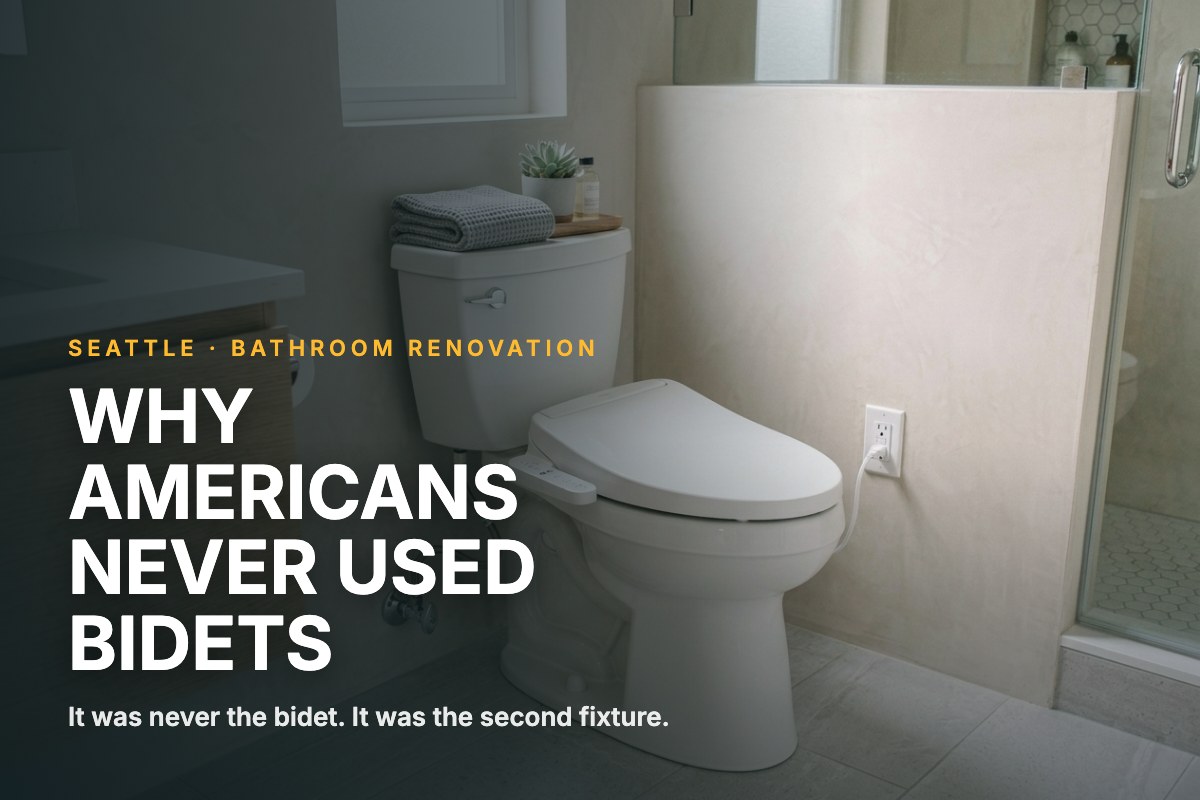
Why Americans never used bidets, and why that is changing
Do you need an outlet for a bidet?