Why Americans never used bidets, and why that is changing
Why Americans mostly skipped the bidet, what changed, and what we see on bathroom renovations when people finally try one.

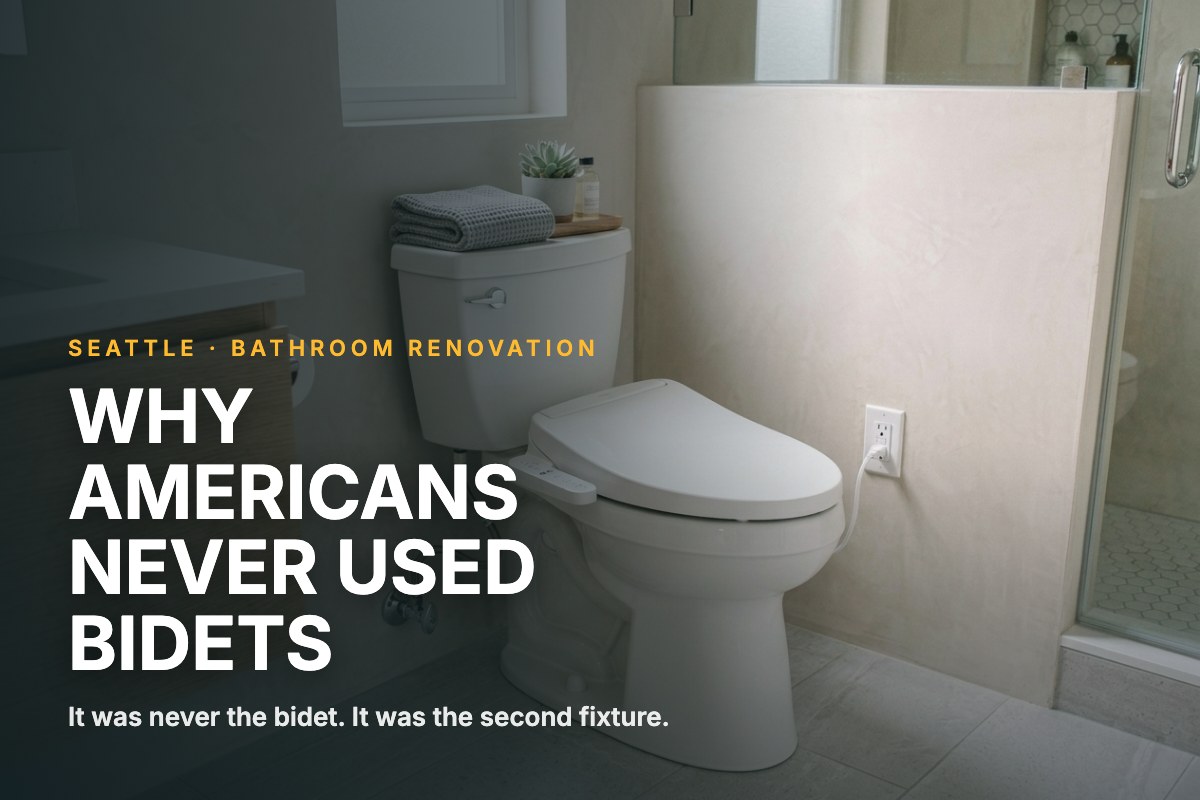
For a long time, a bidet in America meant a second fixture, a second drain and floor space nobody had. That is not what a bidet is anymore. What is left is habit, and habit changes the first time somebody tries one.
The short answer
Americans mostly skipped the bidet because it used to be a second fixture — its own bowl, its own water supply, its own drain, and floor space most American bathrooms never had. That is not what a bidet is anymore. Today it is a seat or a thin attachment on the toilet you already own, and it fits in about twenty minutes.
The hard part is gone. What is left is habit. And habit, in our experience, changes the first time somebody actually tries one.
Why it never caught on here
The way we see it, the barrier was mostly practical. For a long time, a bidet meant a separate porcelain fixture standing next to the toilet — the kind people remember from a hotel bathroom somewhere else.
Adding one of those to an American bathroom was not a purchase. It was a renovation. It needed a new supply line, a new drain and a spot on the floor that usually did not exist. So almost nobody did it, and most Americans never used one.
When something is that hard to try, nobody gets the chance to find out whether they like it.
What changed
The bidet moved onto the toilet.
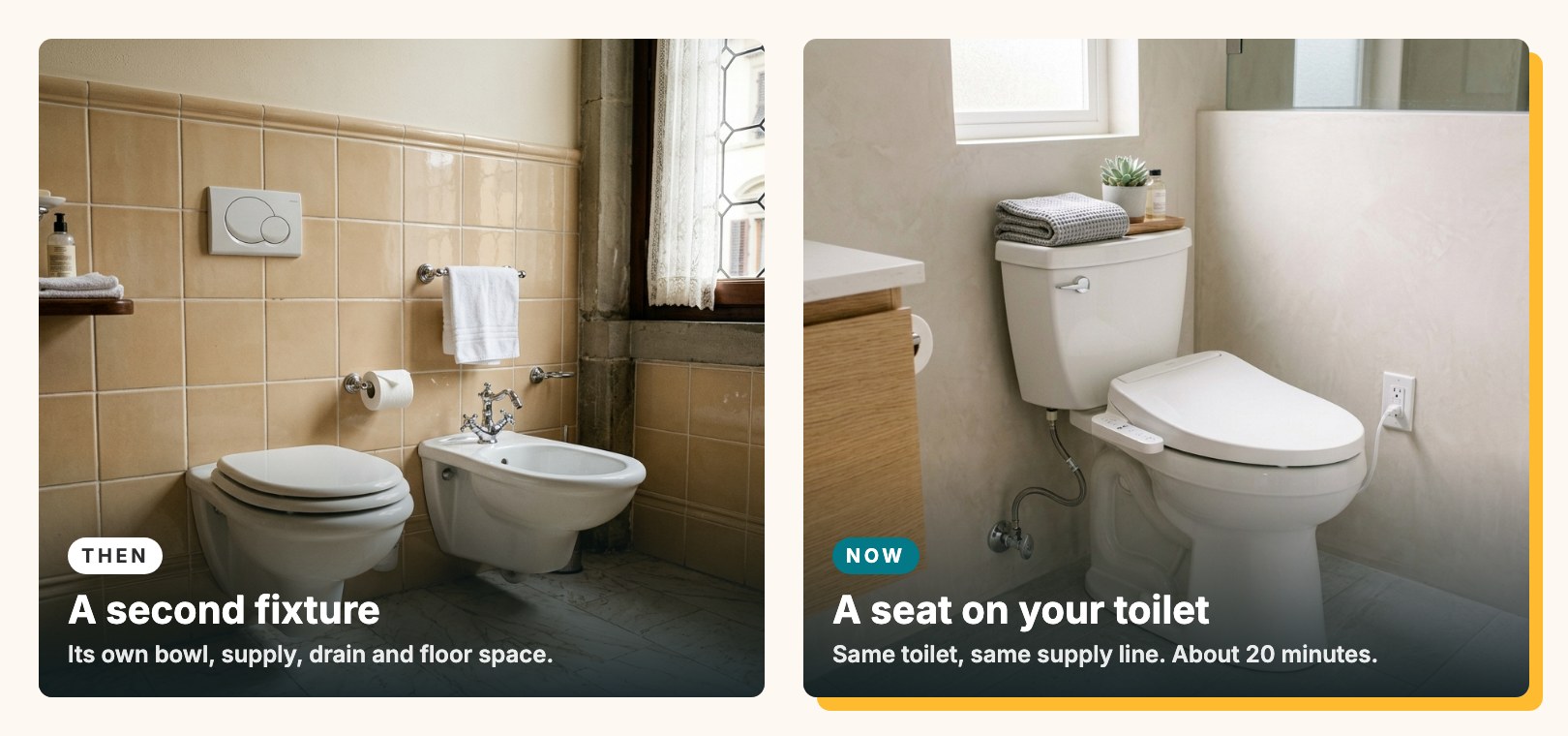
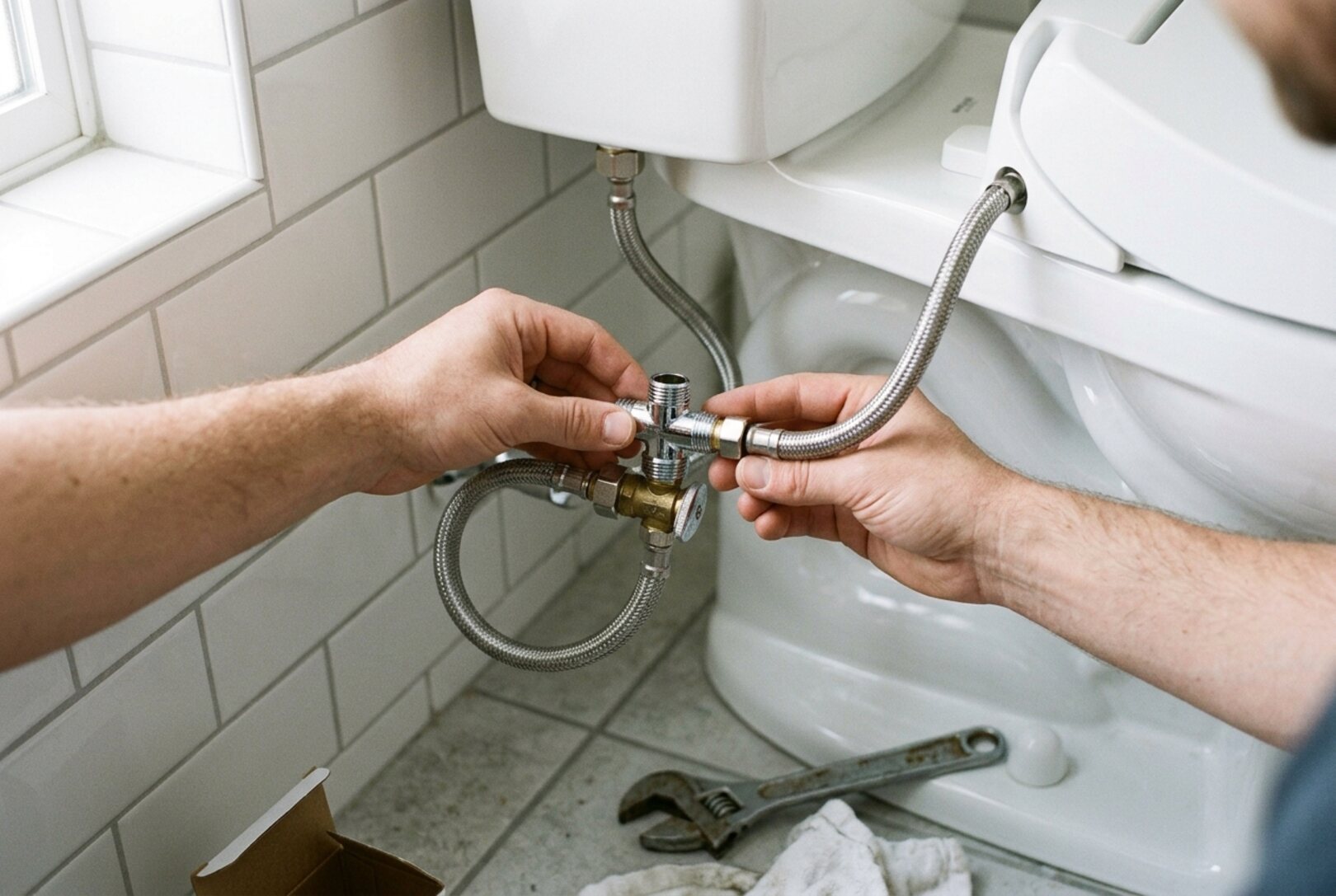
A bidet seat replaces the seat you already have, on the same two bolts. A small T-fitting splits the water line that already feeds the toilet: one branch still fills the tank, the other feeds the seat. No second drain. No new supply run. No floor space.
An electric seat heats the water and the seat and runs a dryer, so it needs one GFCI-protected outlet behind the toilet. A non-electric attachment is a thin plate under your seat and needs nothing at all.
Bidet seat
Replaces your toilet seat. Electric, with warm water, a heated seat and a dryer. Needs one outlet.
Bidet attachment
A thin plate under your existing seat. No electricity, cold water only. The cheapest way to try one.
Bidet fixture
The old version: a separate bowl beside the toilet, with its own supply and drain. Rarely worth it now.
What we see, over and over
We are a bathroom renovation company, and every bathroom we quote has a line for an outlet behind the toilet. So the bidet comes up every time, and the conversation goes one of two ways.
Some people do not know what it is. They picture the separate fixture, or nothing at all. Once they learn it is a seat on the toilet they already have, most of the objection disappears on the spot.
Some people push back. Not about the cost, not about the plumbing. They just do not want one, and you cannot argue somebody out of a preference. We have tried. We once asked a client three times in the same project and got three noes — the story is here.
What changes minds is not an argument. It is trying one. We have watched people who were sure they did not want a bidet try one and change their mind.
Once you use one, you do not go back. That is not a sales line. It is what happened to every person at this company, and it is what we hear from clients who finally try one.
Why we are pushing this
We will be honest about our bias: everyone at DuetRight has a bidet, and not one of us has gone back. That makes us enthusiastic, and probably a bit much at dinner.
It does not make us money. We do not sell the seats. You buy one yourself, whenever you want. What we want is for more people to get the chance to try one — because the only thing that ever really kept Americans from the bidet was that it was hard to try, and it is not hard anymore.
How to try it without committing
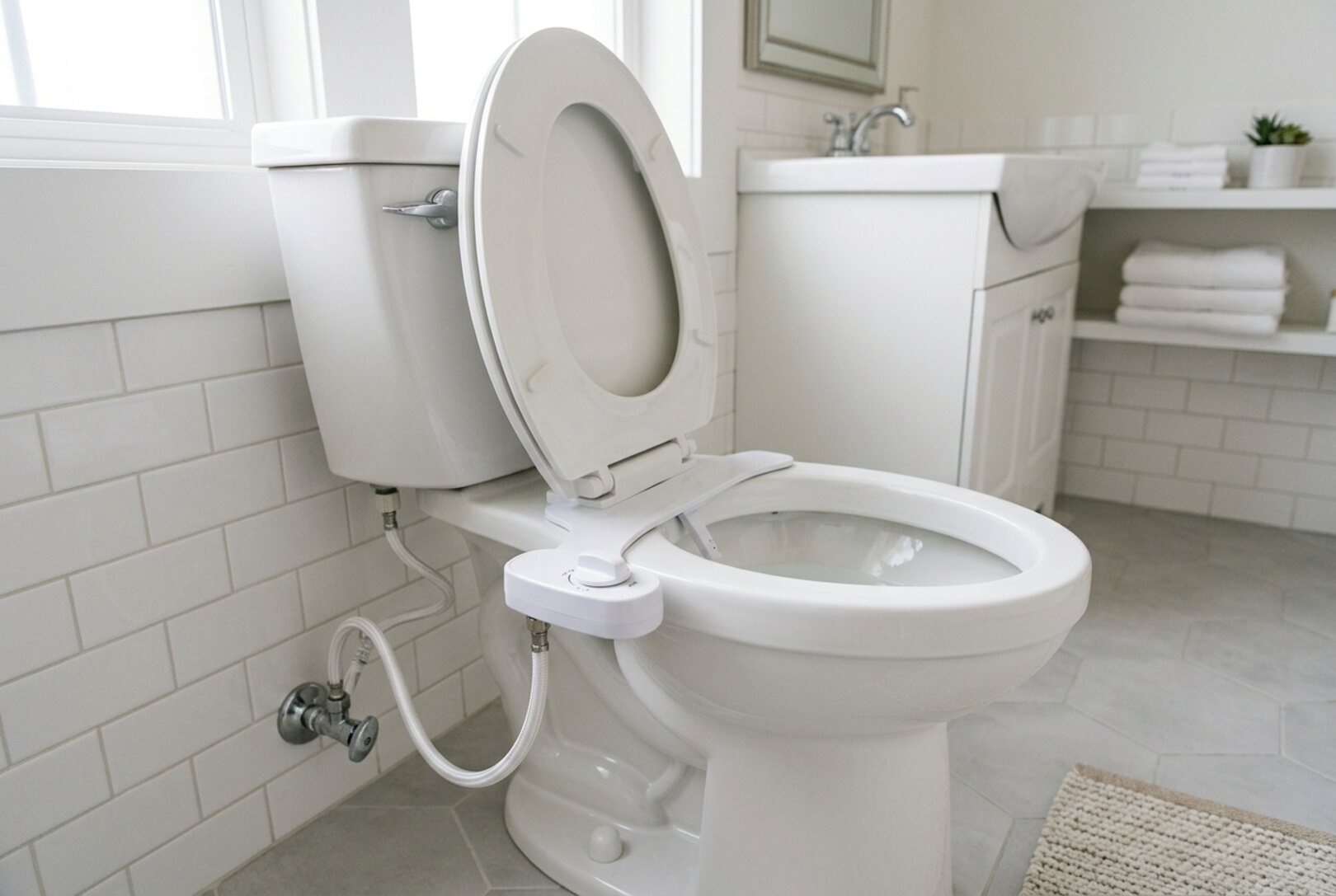
- Try an attachment. It is the cheapest honest way to find out whether you like it. It fits under your seat and comes off again.
- Leave yourself the option. If a bathroom renovation is coming, have an outlet put in behind the toilet while the wall is open. After the wall closes, that same outlet is its own job.
- Upgrade when you are ready. Clip the seat on, plug it in.
Frequently asked questions
Why don't Americans use bidets?
Mostly because, for a long time, a bidet meant a separate fixture with its own supply line, drain and floor space. Adding one to an American bathroom was a renovation, so very few people ever did. Modern bidet seats and attachments fit on an existing toilet instead, which removes that barrier.
Is a bidet worth it?
For most people who try one, yes — the common report, and our own experience, is that people do not go back. It is a preference rather than a fact, so the low-risk way to find out is a non-electric attachment before buying an electric seat.
Do you need special plumbing for a bidet?
No, not for a seat or an attachment. Both tee into the water supply line already feeding the toilet. Only a separate bidet fixture needs its own supply and drain.
Can you add a bidet to any toilet?
Almost any. A bidet seat bolts on where your current seat is. Check whether your bowl is elongated or round, and buy the seat to match.
Does a bidet need electricity?
Only an electric seat, for warm water, the heated seat and the dryer. It needs one GFCI-protected outlet behind the toilet. Non-electric attachments run on water pressure alone.
What is the difference between a bidet seat and a bidet attachment?
A seat replaces your toilet seat and is usually electric, with warm water and a dryer. An attachment is a thin plate under your existing seat, runs on cold water with no electricity, and is the cheapest way to try one.
The takeaway
The bidet never really lost in America. It was just never in the running, because trying one meant a second fixture. That barrier is gone. A bidet is now a seat on the toilet you already own.
So try one. Start with an attachment if you are not sure. If you are renovating a bathroom, leave yourself an outlet behind the toilet. And if you are the person in your house who is resisting — we get it. We have seen plenty of people like you change their minds.
Seattle bathroom renovation
Planning a bathroom? Leave yourself the option.
We put a line for an outlet behind the toilet on every bathroom we quote. Strike it off if you do not want it — we do not sell the bidet either way.
Explore Recent Posts
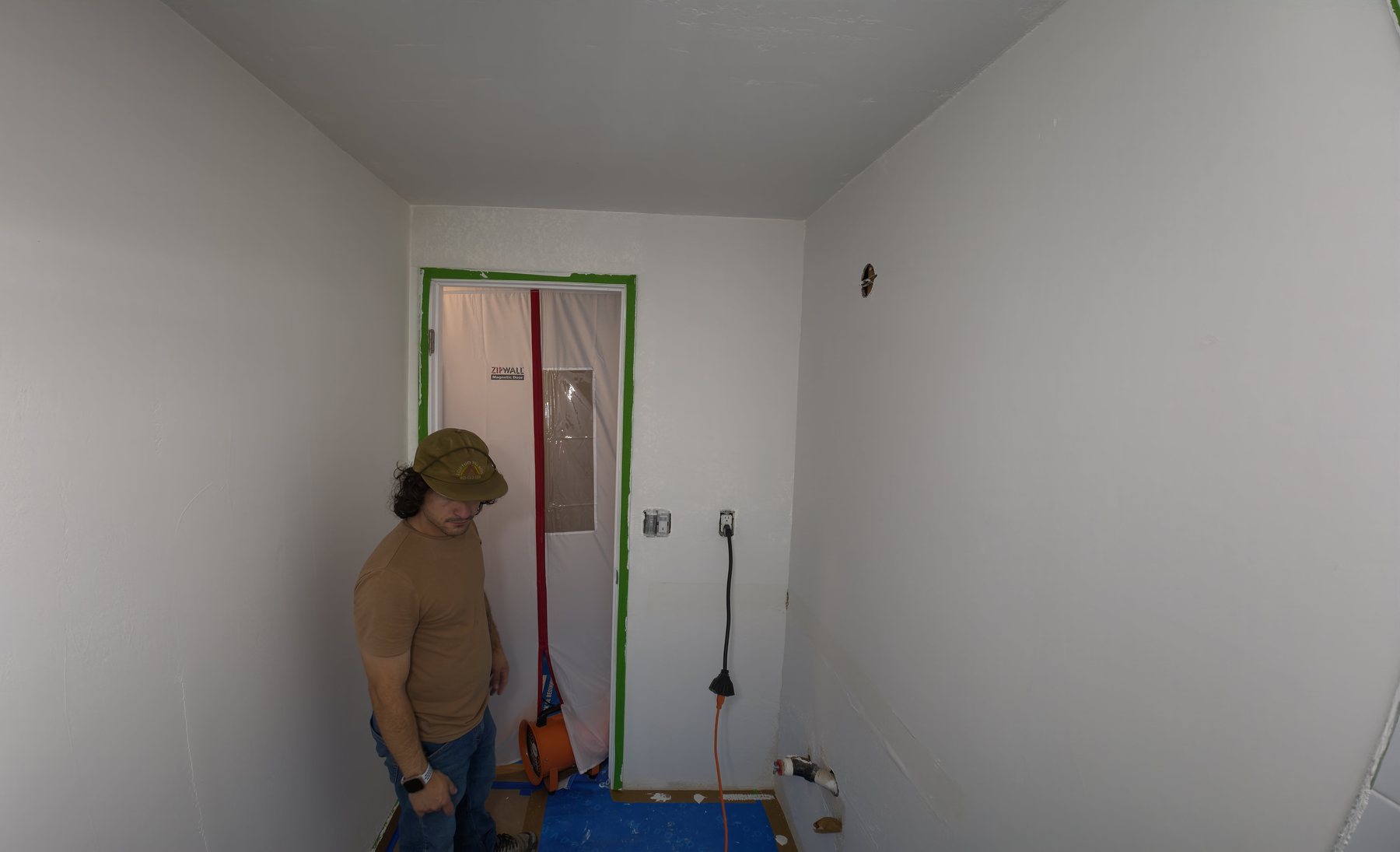
Do you need an outlet for a bidet?
How to Choose the Right Contractor in Seattle: It Goes Both Ways