


Shower Leaks & Hidden Water Damage Repair in Seattle
A leaking shower rarely stops at the surface. We find the source, open only what’s necessary, repair damaged material, and rebuild the shower on a waterproofing system designed for Seattle homes.
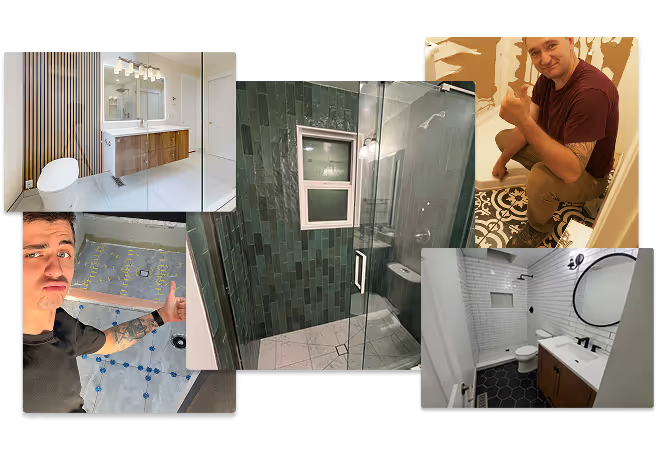
What Water Damage Looks Like Before It Becomes Obvious
Loose tile, dark grout, swollen trim, a soft wall, or a stain below the bathroom can all point to water moving where it should not. These real DuetRight bathroom projects show the kinds of assemblies we inspect and rebuild.
Loose Tile Is a Symptom
Tile that moves, cracks, or sounds hollow often means the bond or backer behind it has failed.
We remove the affected finish, inspect the substrate and framing, replace damaged material, then rebuild the waterproofing and tile layers in the right order.
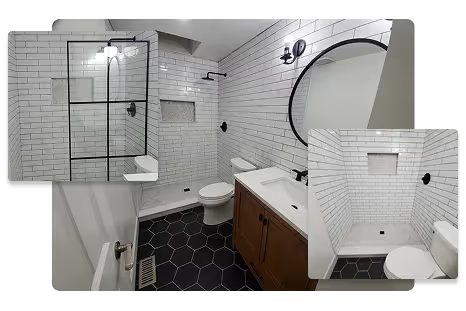
The Leak May Be Behind the Wall
A shower can look fine while water escapes at a valve, corner, curb, niche, or failed transition.
We trace the path before closing anything up, repair the plumbing or waterproofing failure, dry and replace compromised material, and restore the finished surfaces.
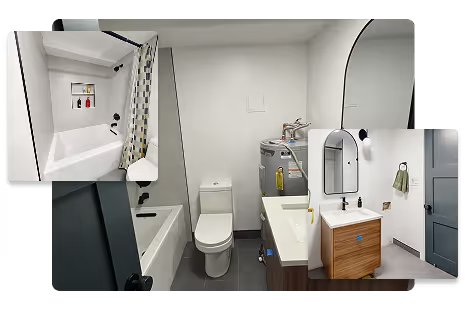
Rebuild the Assembly, Not Just the Appearance
New grout or caulk can hide a problem for a while; it cannot repair failed waterproofing.
When damage requires a larger rebuild, we install a continuous waterproofing system, seal every corner and penetration, and finish the shower so it is durable, cleanable, and built to last.

Shower Leak & Water-Damage Repair Across Greater Seattle
Seattle’s rain and older housing stock make moisture management especially important. We work in houses and condos across Seattle and nearby communities, and we know how to separate an isolated repair from a problem that needs a deeper rebuild.
We regularly help homeowners throughout:
- Alki
- Admiral & North Admiral
- The Alaska Junction
- Fauntleroy
- Arbor Heights
- Gatewood
- Morgan Junction
- Highland Park
- Delridge
- Genesee Hill


The Earlier You Investigate a Shower Leak, the Smaller the Repair May Be

What Makes Shower Leaks Hard to Diagnose

How We Diagnose and Rebuild
What the Repair Can Include
The right scope depends on where the water starts and what it touched. We keep the repair as focused as the evidence allows, and we explain any change before additional work moves forward.

Leak Investigation & Selective Demolition
We inspect visible symptoms, review likely paths, and open only the area needed to confirm the source and extent.

Plumbing, Drain & Valve Repairs
When the failure is at a valve, supply, drain, or connection, we repair it before rebuilding the surrounding assembly.

Substrate, Framing & Drywall Repair
We remove compromised material, dry the area, and replace damaged backer, framing, insulation, drywall, or trim as the approved scope requires.

Waterproofing & Shower Rebuild
We rebuild the shower zone as a system: sloped drainage, sealed corners and penetrations, continuous waterproofing, and inspection before finish work.

Tile, Microcement & Finish Restoration
We restore the finished surfaces with tile, microcement, grout, sealant, and transitions detailed for cleaning, movement, and long-term moisture control.

Ventilation, Paint & Trim
We finish the surrounding room with moisture-resistant materials, crisp trim and paint, and ventilation improvements when the approved scope calls for them.
Built Back Correctly
Stopping the leak is only the first half of the job. The repaired area has to be dry, structurally sound, continuously waterproofed, and detailed so normal movement and cleaning do not reopen the same path.

Code & Permit Coordination
Navigating the city's requirements can be complex, so we handle it all for you. We manage all required permits including construction and electrical through SDCI and plumbing through Public Health–Seattle & King County, submitting everything via the Seattle Services Portal.

Inspection Before We Close the Wall
We verify repairs, waterproofing continuity, corners, penetrations, drainage, and moisture-sensitive transitions while the assembly is still visible—not after the final surface is installed.

Moisture-Resistant Construction
We use materials and detailing suited to Seattle bathrooms: continuous waterproofing in the wet zone, compatible backer and sealants, mold-resistant materials where appropriate, and ventilation that exhausts outdoors.
From Leak Concern to a Clear Repair Plan

Show Us the Symptoms
Send photos and tell us what you notice: movement, staining, soft material, a drip, odor, or damage in the room below.
Inspect & Define the Unknowns
We inspect the likely source and path, explain what can be confirmed now, and identify conditions that require selective opening.
Approve the Repair Scope
You receive a clear quote and schedule for the known work, with a documented plan for any concealed damage found after opening.


"The Bathroom I Wanted"
"I used DuetRight to renovate my bathroom. As expected, they did an amazing job and were able to work with me to design the bathroom I wanted. Super happy and I look forward to working with them again. Thank you guys!"

SatyaJit P.

"Whole Process Stress-Free!"
"The DuetRight team did an incredible job remodeling the single bathroom in my condo, working with me every step of the way designing, picking out materials, purchasing, and coordinating. They were very communicative and organized making the whole process stress-free!"

Tom S.
"Solved the Issue"
"DuetRight helped us to re-tile our shower after we discovered a rotten backboard causing the previous tiles to fall off. The team efficiently solved the issue, leaving us with a beautifully tiled, durable shower."

Taylor H.

Angelo Russoniello

Stan Miron

Vladimir Moroz

Serhii Potavov

Austin Thomas
FAQs
More questions? Don't be shy. Give us a call!
We are a general contractor, not a health authority, so we will not hand you an opinion we are not qualified to give. What we will do is tell you exactly what we find, what it will take to remove it, and what caused it. For health effects, the EPA's guidance on mold is the right place to start, and your doctor is the right person to ask about your own symptoms. What we can tell you from the work itself: mold in a Seattle bathroom is almost always a moisture problem with a specific cause, and the cause is fixable.
Because the cause gets corrected, not just the damage. The pattern we see most is a repair done well and a cause left alone — then the same homeowner calls again in two years. Very often the cause is ventilation: a fan that is undersized, ducted into the attic instead of outside, or never run long enough. Sometimes it is a penetration nobody sealed, a slope sending water the wrong way, or waterproofing that was never built as a system behind the tile. We tell you which one you have, and correcting it is part of the job rather than an upsell.