Failing Shower Pan? Smell, Standing Water and Crumbling Grout Explained
Shower smells, water sits on the floor, grout crumbles early? Those are signs of a failing shower pan. What a thermal camera showed us and what you can check.


The shower was about a year and a half old. It looked great. And every so often, it smelled.
The homeowners had also noticed that the grout came loose when they cleaned it with a soft sponge, and that parts of the floor stayed dark long after a shower. Their builder's warranty was about to run out, so they asked us for a second opinion they could put in writing. This is what we found, what we got wrong along the way, and what any homeowner can check in their own shower this weekend.
What the homeowners noticed
- A smell that came and went. Musty some days, closer to stale smoke on others, and strongest near the drain.
- Grout breaking down early. Pieces came out under a non-abrasive sponge. That should not happen in a shower this new.
- Slow drying. Some grout lines stayed dark for hours after a shower.
Before they called us, a plumber had already confirmed that the P-trap under the shower holds water and the venting was fine. That mattered, because it ruled out the most common cause of sewer smell.
How we looked: two visits, nothing cut open
Visit 1. Stan inspected the floor, joints and drain with the grate off, measured airflow at the exhaust fan, scanned the shower and the ceiling below it with a thermal camera, and set up a standing-water test. The shower had not been used for about 24 hours.
Visit 2. Angelo and Stan came back about two hours after the last shower, on purpose. On a thermal image, a wet surface reads cooler than a dry one, because evaporation pulls heat out of it. Two hours after a shower is the moment a floor shows you where the water actually goes.
Anatomy of a shower pan
The shower pan is everything under the floor tile that shapes the floor and keeps water out: the mortar bed, the waterproofing and the pre-slope. A tiled shower floor is a stack of layers, and the tile is not the layer that keeps water out. Tile and grout are the finish. Under them, a mortar bed is shaped so every part of the floor slopes toward the drain. Under that, a waterproofing layer catches whatever soaks through the grout and ties into the drain, so water has only one way out. The drain body connects all of it to the pipe, and the P-trap below it holds a plug of water that stops sewer gas from coming up.

When a layer is off, everything above it pays for it. A low spot in the mortar bed can't be seen through the tile, but it holds water after every shower, and the grout sitting in that water is what fails first. Keep this picture in mind for the next section.
Try it yourself. Switch between a floor built right and this shower, run a shower, turn on the thermal view, and pull the layers apart. Tap any layer to see what it does.
Tap any layer
Every part of a shower floor has one job. Tap a layer, the drain or the trap to see what it does, what goes wrong, and what we found in this shower.
What we found

1. The water was not running to the drain. A floor sloped correctly toward a center drain should leave, at most, a small damp ring around the drain. This one held water in a long band that crossed the floor, passed through the drain and kept going toward the edges. The corners were already dry. That pattern points to flat or low spots in the mortar bed under the tile. Plumbing code asks for at least ¼ inch of slope per foot toward the drain, and it has to be even.
The day-one scan, at 24 hours, showed nothing unusual. So the water does leave eventually. The problem is that parts of the floor stay wet for hours after every single shower.
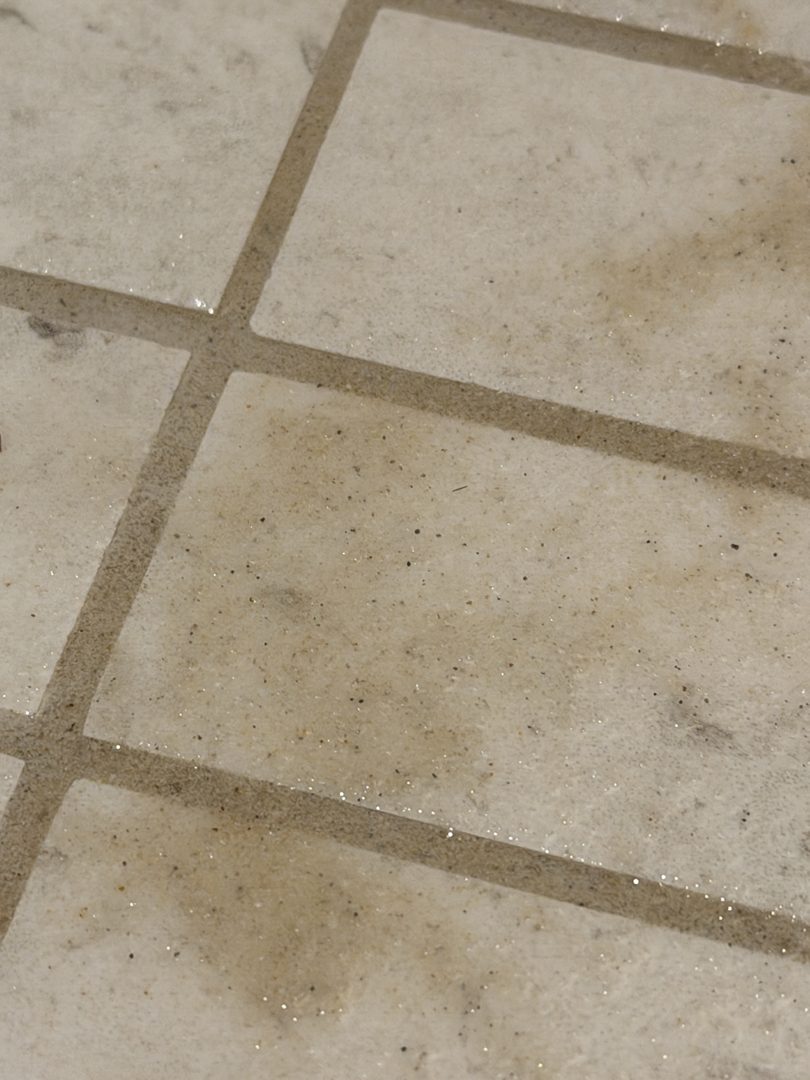
2. The grout was failing where the water sat. The dark, stained, crumbling grout lined up with the wet band almost exactly. The floor uses small rectangular tile, which means a lot of grout lines. That is not a mistake on its own. Small tile is common on shower floors because it follows the slope. But every joint is a place water can soak in, and cement-based grout is meant to dry out between showers. Grout that never dries breaks down early and gives mildew a home. That is your musty smell.
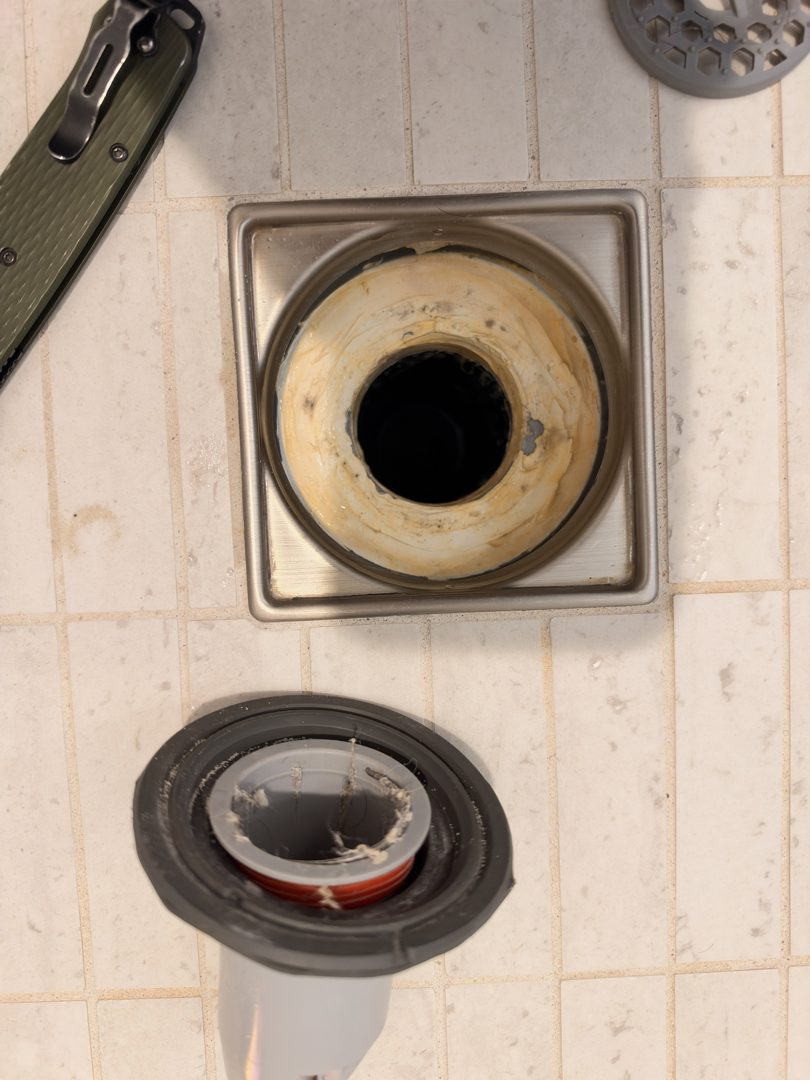
3. The drain body was packed with caulk. With the grate and the removable insert out, the inside of the drain was lined with a thick layer of cream-colored sealant. It was discolored, chipped, and came apart under light finger pressure. A shower drain is supposed to be joined to the waterproofing layer and the pipe by its own designed connection, not held together with caulk. A lot of caulk in a drain usually means it was sealed after the fact.

Here is why that matters even with a good P-trap. The trap sits below the floor and blocks gas coming up the pipe. It cannot stop odor or moisture escaping through gaps around the drain body, above the trap. When the smell is strongest at the drain and the plumber says the trap is fine, the drain body is the next place to look.
4. The bathroom fan was on its lowest setting. It has three settings (50, 80 and 100 CFM) and was running on the lowest. Stan measured about 57 CFM, switched it to the highest setting, and measured about 80. That alone helps the room dry faster, and it took two minutes.
What we ruled out
- The P-trap and venting. Confirmed by the homeowners' plumber.
- An active leak below. The ceiling under the shower showed no thermal anomaly and no stains.
What we got wrong
Our standing-water test did not work. The plug we used did not seal the drain, and the water drained out within a few hours. That test proves nothing either way, so we said so in the report instead of calling it a pass. We also did not take moisture meter readings, which would have added hard numbers to what the thermal camera showed. Next time we bring a test plug that seals and take meter readings against a dry reference spot. We would rather write that down here than have you find out the hard way that a test was skipped.
What you can check in your own shower
- Watch the floor dry. About an hour after a shower, look at the grout. A healthy floor dries evenly and quickly, with any last damp spot right at the drain. Dark bands or patches far from the drain mean water is sitting there.
- Do the ball test. Set a marble or a golf ball down in a few spots on the floor. It should roll toward the drain from everywhere. If it stops or rolls sideways, you have a flat or low spot.
- Smell at the drain, then ask about the trap. If a plumber says the trap holds water and the venting is fine but the drain still smells, look at the drain body and its seal next.
- Check your fan setting. Many bathroom fans have a speed selector behind the grille, and a lot of them ship on the lowest setting. Run the fan during the shower and for at least 20 minutes after.
- Don't just regrout. If grout keeps failing in the same place, the problem is usually underneath it. New grout on a floor that holds water starts the same cycle over.
- Put it in writing before the warranty ends. If your home is still under a builder's warranty, send a written claim with photos and a date. Written notice is what counts, even if the repair happens later.
How we build shower floors so this doesn't happen
Tile and grout are the finish, not the waterproofing. On every shower we build, the waterproofing goes in and gets flood tested before any tile goes down. The slope and the drain connection under the tile decide whether a shower dries out after every use or slowly fails. Getting that layer right is what makes a shower last.
If your shower smells, stays wet, or keeps eating its grout, we can come take a look, with the thermal camera, and without cutting anything open. See how we handle a bathroom renovation in Seattle, or read more about how to tell if water is getting behind your shower tile and when tile failure signals hidden mold.
Questions homeowners ask us
How do I know if my shower pan is failing?
The common signs are a smell near the drain, water that sits on the floor or grout that stays dark for hours after a shower, grout that stains or crumbles early, and a ball that will not roll to the drain. A plumber can rule out the trap, and a thermal camera shows where water sits without cutting anything open.
Why does my shower smell if the P-trap is fine?
The trap only blocks gas coming up from the pipe below it. Odor can still come from grout and joints that stay wet and grow mildew, or escape through gaps around the drain body, which sits above the trap. If the smell is strongest at the drain, have the drain body and its seal inspected.
How do I know if my shower floor is sloped correctly?
Water should run to the drain from every direction and the floor should dry evenly. A ball set down anywhere should roll toward the drain. Code asks for at least ¼ inch of slope per foot. A contractor can confirm it with a level, and a thermal camera shows where water sits after a shower.
Can you fix shower floor slope without tearing out the floor?
Usually not. The slope lives in the mortar bed under the tile, so correcting it means removing the floor tile and mortar bed, checking the waterproofing and the drain connection, re-sloping, and re-tiling. Sealing or regrouting the surface will not change where the water goes.
Explore Recent Posts

The Story of Chris's Three Bathrooms: A West Seattle Bathroom Renovation
Inside a Capitol Hill Condo Kitchen Renovation: The Doorway Had to Move