
Mold and Your Health in a Seattle Home: What's Real, What's Hype
What mold really means for your health, from a Seattle GC who opens these walls weekly — what the CDC study actually said, where mold hides, and how to fix it.

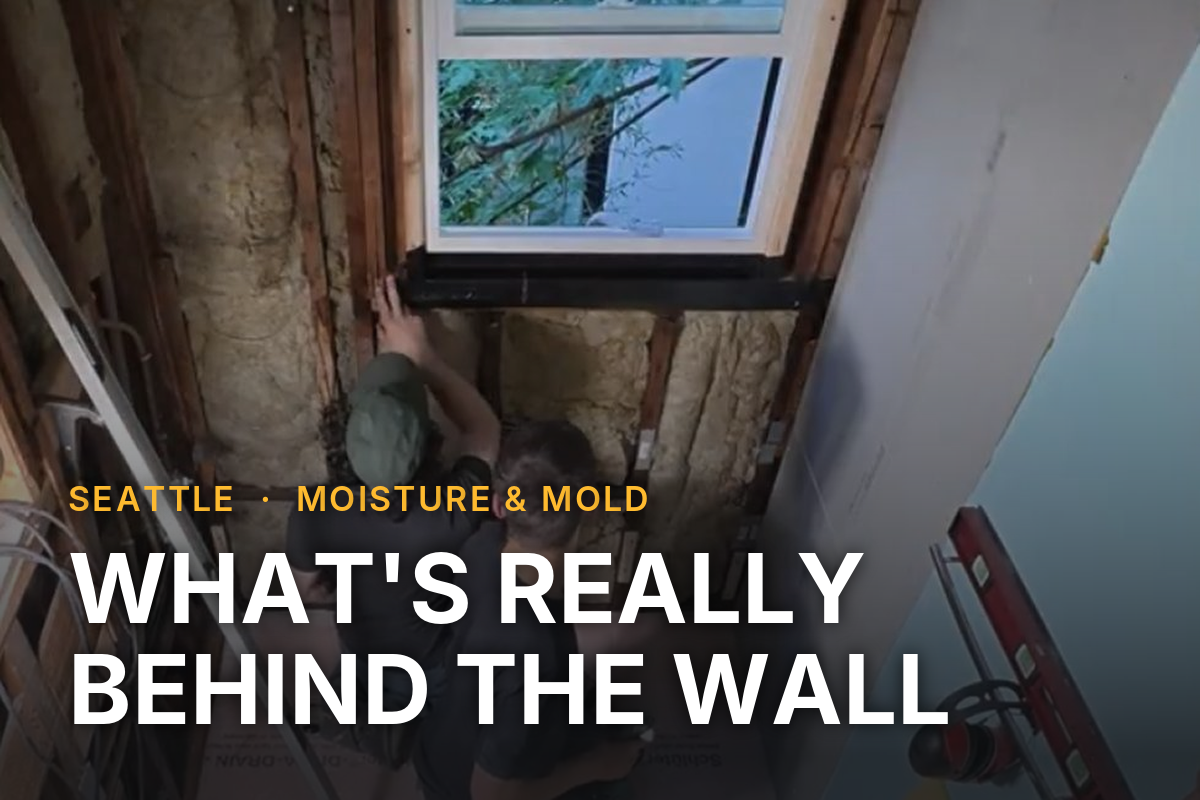
Mold headlines have been everywhere lately, and most of them are scarier than they are useful. We open walls in Seattle homes every week, so here's the honest version: what the research actually says, what we actually find behind tile and siding, and what's worth doing about it in a house in this climate.
One thing up front. We're general contractors, not doctors. We can tell you what's growing in your wall and why the water got there. If you're feeling unwell, that's a conversation for your physician — and this post will not tell you what your symptoms mean.
What That CDC Study Actually Said
In late July 2026, the CDC published the first real U.S. estimate of invasive mold infections — roughly 450 cases found across Atlanta-area hospitals over five years, with about a third of those patients dying in the hospital. It's a serious finding, and it got flattened into social posts implying everyone's bathroom is a health emergency.
It isn't saying that. Invasive mold disease is a rare, severe infection that happens almost entirely in people with seriously weakened immune systems — cancer patients, transplant recipients, people with chronic lung disease, the frail elderly. For the vast majority of healthy people, inhaling ordinary household mold spores does not cause that kind of illness.
That distinction matters, because the real story for homeowners isn't rare infection. It's the ordinary, well-documented stuff below — and that's plenty of reason to fix a damp wall.
What Is Well Established
Here's where the public-health agencies are clear and consistent. Per the CDC, exposure to damp and moldy environments may cause a variety of health effects, or none at all — some people get a stuffy nose, sore throat, coughing or wheezing, burning eyes, or a skin rash, and others in the same house notice nothing.
The stronger evidence is about dampness itself. CDC notes that occupants of damp indoor environments are at risk for upper and lower respiratory symptoms, worsening of existing asthma, and new-onset asthma, along with allergic rhinitis and eczema. The EPA adds that molds produce allergens and irritants, and that inhaling or touching mold or mold spores may cause allergic reactions in sensitive individuals.
Who should be most careful: people with asthma or a mold allergy, people with chronic lung disease, and anyone immune-compromised. If someone in your household is in one of those groups, a damp wall stops being a maintenance item and becomes a priority.
Why Seattle Homes Are Built for This Problem
Our climate does three things at once, and the combination is what gets homes in trouble.
Months of it. It isn't the volume of rain so much as the duration — long stretches where nothing outside ever fully dries and indoor air stays heavy. Mold doesn't need a flood. A consistently damp surface will do.
Older housing stock. Craftsmans from the 1910s, mid-century ramblers, 80s condos. We routinely find tile set straight onto drywall, no waterproofing membrane, bath fans that were never ducted anywhere, and crawlspaces with no vapor barrier. None of that was negligence at the time. It's just how it was built, and it doesn't survive this climate.
Tightened-up newer homes. Weatherization and new windows made Seattle houses far more efficient — and much worse at drying themselves out. Seal a house without upgrading ventilation and all the moisture your family generates has nowhere to go.
Where We Actually Find It (Beyond the Shower)
Showers get all the attention, and for good reason — we wrote the full breakdown in what a loose shower tile really means. But the shower is rarely the only place. These are the spots that surprise homeowners:
- The bath fan that vents into the attic. Extremely common in older Seattle homes. Every shower pumps warm, wet air straight into cold roof framing. The bathroom looks fine; the attic sheathing is black.
- Window frames and sills. Winter condensation runs down glass and sits in the frame. If your windows sweat every cold morning, that water is going somewhere.
- The crawlspace. Bare soil, no vapor barrier, and a house breathing that air upward all winter. One of the most-missed sources of whole-home musty smell.
- Under sinks. A supply line weeping a few drops a day for two years does more damage than a burst pipe you notice in an hour.
- Behind siding, below a roof detail. Failed flashing, a clogged gutter, a deck ledger with no flashing at all. The interior symptom shows up in a room nowhere near the actual leak.
- Laundry rooms and closets on exterior walls. Poor air movement plus a cold wall equals a surface that never dries.
The pattern in every one of these: a small amount of water, arriving repeatedly, somewhere air doesn't move. That's the whole recipe. Dramatic leaks get fixed. Slow ones get lived with.
The Four Numbers Worth Knowing
| Number | What it means |
|---|---|
| 30–50% | EPA's ideal indoor humidity range; keep it under 60% at all times. A $15 hygrometer tells you where you stand. |
| 24–48 hours | Dry wet materials within this window after a leak or spill and, in most cases, mold will not grow. Miss it and you're remediating instead of drying. |
| 10 square feet | EPA's rough line between a homeowner cleanup and calling in professionals. Bigger than that, or tied to sustained water damage, means help. |
| $0 | What you should spend on mold testing when the mold is already visible — EPA says sampling is usually unnecessary in that case, since there are no federal standards to compare results against. |
That last one saves people real money. We've met homeowners who paid several hundred dollars for a lab report confirming what they could already see, and still had the leak that caused it. Spend the money on finding the water.
Fixing It in the Right Order
Remediation without a water fix is a rerun. Every time. The sequence that actually works:
- Find the water source. Not the mold — the water. Failed flashing, missing membrane, an unvented fan, a crawlspace with no barrier. This is the whole job; everything after is cleanup.
- Fix the source, then dry everything out. In that order.
- Remove what can't be saved. Porous materials that stayed wet — drywall, insulation, backer board — get cut out, not bleached. Bleach on drywall treats the color, not the colony.
- Rebuild to handle water this time. A real waterproofing membrane in wet areas, a bath fan sized for the room and ducted to the outdoors, vapor barrier in the crawlspace, flashing done right.
- Give the air somewhere to go. In a tight house, ventilation is the difference between a repair that holds and one you redo in four years.
Most of what we handle during a bathroom renovation in Seattle is exactly this — the failure is usually in step 4 of whoever came before us. It's also why we open the wall before quoting a number instead of guessing from a photo.
Contractor or Doctor?
Clean lines here, because this is where people get taken advantage of.
Call a contractor when you can see mold, smell a persistent musty odor, have visible water damage or staining, notice tile or flooring moving, or your windows run with condensation every winter morning. Those are building problems with building fixes.
Call your doctor about any symptom, full stop. We can't and won't tell you whether your house is making you sick. What we can do is remove the dampness so that question stops being open.
Be skeptical of anyone who does both — outfits that diagnose your health and then sell you the remediation are a business model, not a diagnosis.
Frequently Asked Questions
Does mold in my house mean my family will get sick?
Not necessarily. CDC is direct that damp, moldy environments may cause a variety of health effects — or none at all. Reactions vary a lot between people in the same home. That said, mold is a reliable sign of a moisture problem that's also damaging the building, so it's worth fixing either way, and worth prioritizing if anyone in the house has asthma, a mold allergy, chronic lung disease, or a weakened immune system.
Should I pay for a mold test?
Usually not, if you can already see it. EPA's position is that sampling is unnecessary when visible mold growth is present, partly because there are no federal standards for acceptable mold levels, so a number in a report has nothing to be measured against. Testing has a real role in a dispute, a purchase, or verifying a large cleanup — but as a first step in your own home, the money is better spent finding the leak.
Can I just clean it with bleach?
On a hard, non-porous surface — tile, glass, a sealed counter — soap and water or a household cleaner is fine for a small spot. On porous material like drywall, insulation, or backer board, bleach mostly removes the stain while the material stays contaminated and wet underneath. Those materials come out. And if it's beyond roughly 10 square feet, or it keeps returning, the water source hasn't been fixed yet.
What's the single best prevention step for a Seattle home?
Ventilation you actually use. Run the bath fan during every shower and for twenty minutes after, and confirm it vents outdoors rather than into the attic — that one check catches a shocking number of hidden problems. After that: keep indoor humidity between 30 and 50 percent, and treat any leak as a 24–48-hour clock rather than a someday project.
Think there's water where it shouldn't be?
Mold in a Seattle bathroom is almost always a moisture problem with a fixable cause. What that repair actually involves: shower leaks and hidden water damage.
We'll take a look, tell you what's actually going on behind the surface, and give you an honest scope — even if the honest answer is that it's smaller than you feared.
Get a free quoteExplore Recent Posts
Do you need an outlet for a bidet?

How to Choose the Right Contractor in Seattle: It Goes Both Ways